Sunday, 6 March 2016

Of Horsetail and Rhododendron

2nd March 2016


Ranger Dan, wader-deep in the chill water of the Lily Pond, was hauling out colonizing horsetail with Wednesday Conservation Team volunteers Les and Mike taking it in turns to watch out for the total submersion that didn’t happen. Given time and left to itself, the horsetail, reed mace, and assorted other vegetation would reduce the pond to a lush, damp patch. And we wouldn’t like that. So, in order to conserve the pond habitat, young Dan waded in. Mind you, the exercise is also a cosmetic one of maintaining a feature in man-made landscape, and not letting nature take over as it is wont to do.


Working in the pond


The rest of us, meanwhile, cleared stray willow saplings from the ride above the pond, and significantly cut back those growing around it. After a cup of coffee and a bite to eat sitting in the dry under the only Grand Fir on the estate, we returned to our task of recent weeks in the adjoining woodland. This area is, in some ways, the most sterile patch in Gibside, dominated as it is by western hemlock underlain by everybody’s favourite invader, the rhododendron. The western hemlock will have to stay until the Forestry Commission come to claim their crop, but we can do for the rhododendron, help give native species a chance, and bring some variety to the woodland floor.

Thinning out the willow saplings
Continuing the war against rhododendrons

Among other things, our job, working with the rangers here at Gibside, is to manage the environment in order to give wildlife a helping hand. Put another way: we interfere with nature in order to support nature. Deciding what is natural, though, is a little difficult – especially when it comes to non-native, introduced species, and invasive species. As volunteers, we do as we are bid; decisions are taken by the professionals. But it is still a question worth pondering. For example, if we remove non-native rhododendron to stop it over-running our woodland floor, then perhaps we should do something about the native bracken that blankets other parts of Gibside’s woods. And what should be done about the likes of Himalayan balsam, Japanese knotweed and the grey squirrel?

I wonder what's for lunch?

Taking a break under the Grand Fir

It’s all a bit subjective. Some would argue that it’s all part of nature, and that nature will sort itself out. Many introduced species will just find their niche and fit in without negatively influencing the environment or markedly changing their host habitat. But some will just seek to conquer, colonize and drive out native species. We don’t want Japanese knotweed blanketing our river banks, or grey squirrels bringing the plague to our beloved reds. Then again, some of us quite like Himalayan balsam; bumblebees certainly do. Ignore the professionals; leave the decisions to me. Let’s start with buying Dan a boat.

No it's not fog but pollen from a yew tree - a gentle
reminder that spring is almost here.

Steve Wootten & Phil Coyne

Thursday, 25 February 2016

Yellow Peril – High-vis Wednesday


24th February 2016


After last week’s rather damp Wednesday, where a few hardy souls from the conservation team spent the day clearing a patch of rhododendrons near the Lily Pond; today the weather reverted to type, bright sunshine and blue skies but cold.

 
Piles of bark chippings ready for spreading.

The small group of volunteers donned high-vis jackets and armed with wheelbarrows, shovels and rakes set off for the Strawberry Castle Play Area. The task for the day was to spread out bark chippings over the play areas. The whole play area is being upgraded and contractors were on site with earth moving machinery – hence the need for high-vis jackets.


The finished job.
 

Loading up the wheelbarrows from the large piles of bark chippings and spreading them over the play areas soon had us warmed up. By lunchtime our supply of bark chippings had run out, so after a short break it was back off to continue the deforestation of the rhododendrons by the Lily Pond – a seemingly never ending task!


The cleared areas.


Not yellow peril but early primroses.

Phil Coyne


Monday, 15 February 2016

Orange Spot

10th February 2016


Frost covered the hollow of the Hollow Walk, and stamped out the pattern of fallen leaves among the trees. The noise of an explosion of jackdaws from the Old Hall faded, and gave way to the call of a red kite.


Frosty Leaves
 
The kite circled low, its colours embellished in the winter light. The bird settled for a moment in the high top of a Wellingtonia , then again drifted low and slowly above us - quite possibly, like a robin, attracted by human activity, hoping to spot some easy pickings. Instead, what it saw, were three old men in the woods chopping down trees: old, but not carrion yet.
 
Cutting down silver birch
 
After a week elsewhere, we were back in Hollow Walk Dene seeking out Ranger Liam’s orange-spotted birch trees to cut down, to let in more light and reduce competition. Remaining birch will have opportunity to grow faster and stronger; ground vegetation should thrive and, perhaps, become more diverse. And the Wednesday Conservation Team will become fitter and stronger - though, at the time, it didn’t feel like that; knackered, is what it felt like.
This young stretch of woodland is faring well. Here and there we tugged out the odd western hemlock sapling – all that remains of a commercially planted and aggressively invasive species. From among patches of heather we cut back birch, broom and bramble.  Better for the heather, and better for the rarely seen stag’s horn club moss that grows amidst it in places.
 
Plan of Nature Playscape
 
Last week the orange spots marked the dispatch of some large holly from the Woodland Playscape area near The Stables. This time the intention was not so much to make room for ground flora, but to make way for children attracted to the newly constructed willow tunnel. As it turned out, the tunnel was lucky to survive the crude felling technique of over-eager, macho volunteers. The day was saved, though, by the skills of Conservation Volunteer Mary, as several males of the species looked on: perhaps not diminutive in stature, but much diminished in reputation.
 
The holly dead hedge takes shape
 
The men look on whilst Mary works!

"Timber"


The Perfect End to The Day


Steve Wootten & Phil Coyne

Tuesday, 19 January 2016

Creative Play

13th January 2016


Happy New Year

It was a good start, and just as it ought to be: pale sunshine, January cold, no wind, and dry. We of the Wednesday Conservation Team always reckoned on Wednesdays being predictably fine, but that all went wrong in 2015. Maybe this is a sign that the weather will revert to its old ways. A nice thought but, of course, complete rubbish, nature doesn’t work like that.
Ordinarily, as you may know, we get our fun from being destructive in the name of nature conservation – laying waste to invasions of Himalayan Balsam, uprooting Western Hemlock and (best of all) making a bonfire of rampant rhododendron. It’s nothing as silly as a new year’s resolution, but we started 2016 by being constructive.

Preparation Work

In the woods, where we were erecting a willow tunnel, it was damp and penetratingly cold, and the relative immobility required by the task almost guaranteed that we would get colder. And we did. Numbed fingers tied ill-practiced knots to temporarily bind the arched willow wands; numbed brains tried to fathom the art of weaving willow. None of us had any experience of this before, and only two of us seemed to have the vaguest idea of what the finished structure should look like but, by a process of corrected error, the job got done.

Getting Started
An Inquisitive Robin

Platting the Willow

Taking Shape

Give it a few months and new green growth should cover our mistakes. Anyway, poor workmanship shouldn’t spoil the fun of the children who come to this Woodland Playscape in the summer; it didn’t spoil ours.
The Finished Product
Steve Wootten & Phil Coyne

Wednesday, 9 December 2015

Strange features in the woods...

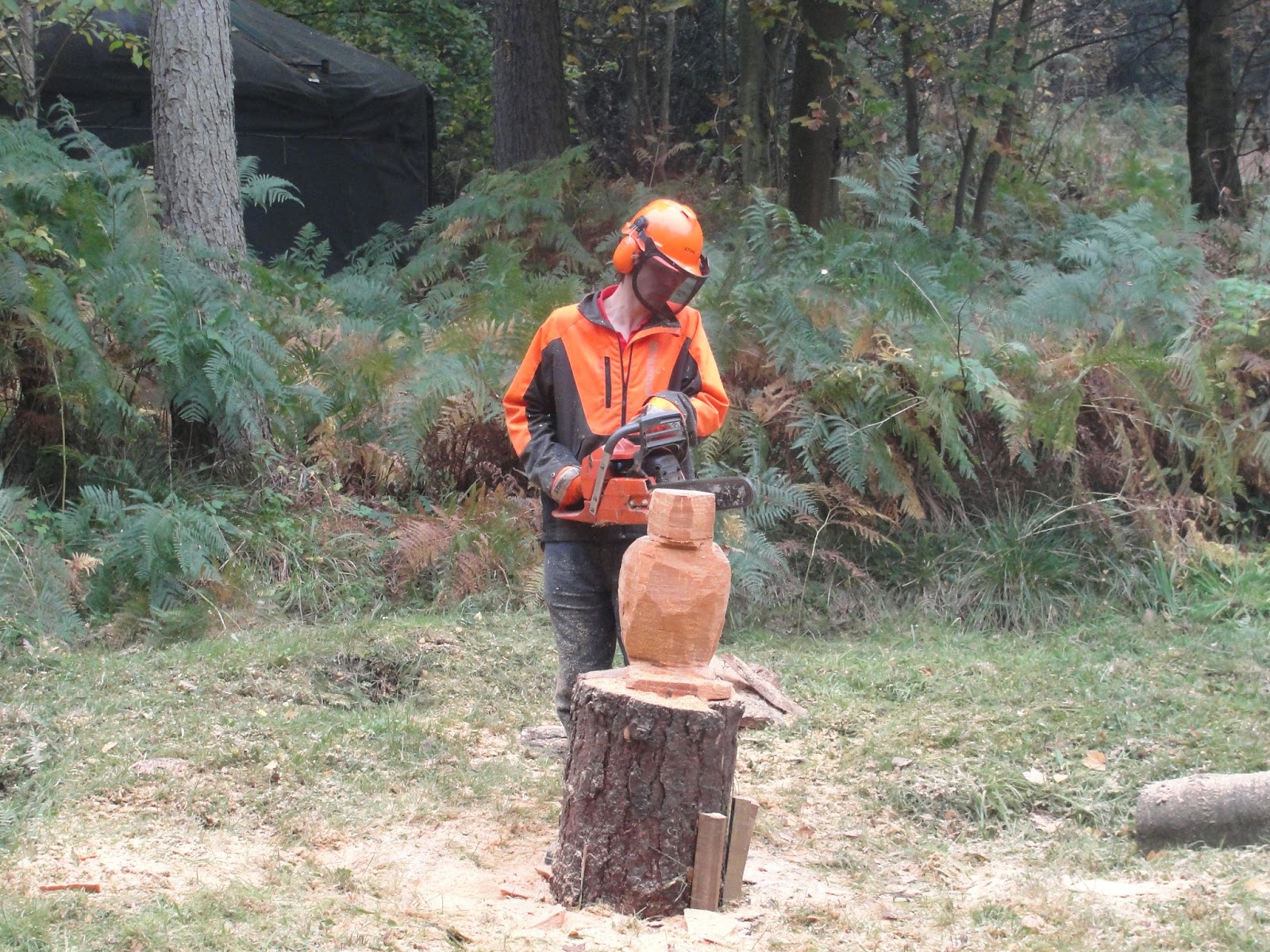
If you go down to the woods today... you may see a few new carvings. Those of you familiar with the carved animals trail in the West Wood may have noticed that a few of the poor wooden creatures are looking a bit past their best. Add onto this some new works going on in our Nature Playscape, and a simple interest in giving it a shot, it's no surprise that the Ranger team have been turning our hands to chainsaw carving!


We started off on the basics - mushrooms. Both Phil and myself have done a few of these in the past, but we decided to do a few bigger ones with the aim of making a complete set for a picnic table with a difference. We used a fallen western hemlock from one of the plantations for these.


Having had so much fun, we decided to make a day of it in the recent half-term, carving publicly in the old sawmill site. It's great to be using what was the industrial home of forestry on Gibside for a modern twist on woodworking. Phil gave it a shot making a bear, whilst I set to work on an owl. Children were fascinated by the gradually appearing animal features, whilst a lot of parents seemed to want to come and have a go themselves!


Our new little Stihl, complete with carving bar, made carving the details a lot easier - and it was a lot less tiring to handle than the big forestry saws! The wood came from a fallen pine stem and some big chunks of Douglas fir, both from the estate and collected with hard work, straining muscles and not a small amount of difficulty one Saturday! For Phil and I, it's a really fulfilling and creative way to use chainsaws, and create something positive out of the sad felling of hazardous trees to make the estate a safer place to visit.

Whilst we've been busy with tree surveying and seasonal leaf clearing we've not had much chance to add to the collection, but the original sculptures are still up at the sawmill site. When tree safety works begin we'll probably get more wood from trees which need felling for safety reasons, and the Nature Playscape improvements will give us more animals to try. Keep an eye out on the estate for any more features that might pop up!

Monday, 30 November 2015

We're Back Again


It’s good to be back. It’s been a poor summer, and something of a disrupted one for this blogger. Not only has there been no Blog, but the usual weekly survey and recording of Gibside’s wildlife was limited to a few days. At least the grass snake sites had their monthly visit – not that there were any snakes at home when we called.

Autumn Mist


Misty Pond


Autumn Colours

 
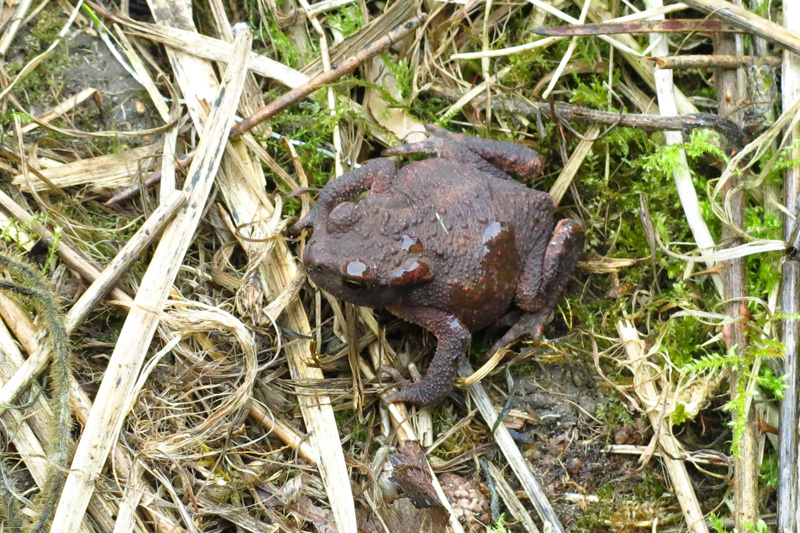
Grass snakes, in one way or another, have been the focus of much of the Wednesday Conservation Team’s work over the last few years: creating a suitable environment generally and eight areas of specific habitat around the Estate intended to encourage nesting and basking, and to make it easier for us to spot them. Except that we haven’t spotted any. Maybe that’s because there aren’t any to be spotted. Still, our work also helps other fauna and flora: toads and voles are often in residence under the corrugated iron sheets.
One of the corrugated iron sheets
A Common Toad found under one of the sheets
A spider with egg-sac on top of one of the sheets
Grass Snake heap covered with tarpaulin

Agapanthia villosoviridescens


Today, we were cutting back cherry laurel from around the overgrown Quarry Pond, letting in more light for a healthier pond. Grass snakes like to hunt in water – especially if there is something there worth eating, and native plants will have the opportunity to thrive now that they are free of the invasive, colonizing laurel. The laurel is now tucked away in the woods in neat piles where it will offer nooks and crannies for woodland creatures, and slowly decay with the help of fungi and other plants and animals.

Mike cutting back cherry laurel


For seven out of the last eight years, Wednesdays could be relied upon to be fine and bright, even in the depths of winter. That certainly hasn’t been the case this year, but today was a good one, just as it should be. We had both our coffee break and lunch in the sunshine, sitting on the ha-ha in a nearby field. Not even Rangers Phil and Liam chain-sawing trees nearby troubled our leisure. And, at the end of a hard day’s work, we took the rare opportunity to rest on our laurels.


The Team resting on their laurels

The Quarry Pond cleared of laurels


Steve Wootten & Phil Coyne 

Tuesday, 19 May 2015

April

29th April 2015


Dog’s mercury, though abundant in our woodlands and one of the earliest plants to flower, can go largely unnoticed. Its flowers are small, green and have no petals. As a herald of spring, it doesn’t make much of an impression, but it’s soon joined by other, more impressive, flowers carpeting the woodland floor – golden saxifrage, wood anemone, wood sorrel and ramsons. Elsewhere primrose, lesser celandine, coltsfoot, and dandelion make a fine show.

Dog's Mercury
 
 
Wood Anemone

Primroses

The oddly delicate moschatel has its five flowers set at right-angles to each other – like clock faces with an extra one on top. Previously recorded along the riverside path and in the woods at the northern end of Ladyhaugh, it has this spring appeared in a swathe near the Lily Pond. It’s small and beautiful but, being almost entirely green, is easily over-looked.

Moschatel

It’s April, and the animal world is preparing for the new season. Frogs have long since spawned, and tadpoles have started to emerge from their gelatinous mess; numerous toads tangle in the ponds, seeking mates; peacock and small tortoiseshell butterflies have started their wanderings; and common carder bumblebees glide the woodland fringes; chiffchaffs seem to be everywhere.

Toadspawn

For many of the Gibside Conservation Volunteers, all this is a sign to pack in for the summer and leave the wildlife to itself. Some, though, opt for the near endless task of grass-cutting, or work at small maintenance jobs. We bloggers make our annual survey of Gibside’s wildlife. Mostly, this is no more than wandering the estate identifying and making a note of whatever is there, which is later transferred to the National Trust’s data bank. Presumably good use is made of all this information. But, anyway, we do it because we like to.
A curious robin

Another regular summer job for some of us is to maintain and monitor the grass snake project patches (See the Gibside Blog 2 July 2014: Not many snakes). Heaps have been topped up or rebuilt, and corrugated sheets put in place. This year there’s an innovation: numbers painted on the underside so they can be readily identified without referring to the site map. That is, identified by the observers, not the snakes. It’s a bit early for grass snakes, but a few field voles and some ants have moved in already. 

A Field Vole peeps out from a hole

A Blogger - hard at work!!

Steve Wootten & Phil Coyne